"What is Rinzai Zen? What is a zendo?"
Rinzai Zen Practice Hall
A Rinzai zendo is, in plain English, a
Rinzai Zen meditation hall or practice hall.
- Rinzai refers to the Rinzai school of Zen Buddhism, known especially for koan practice and teacher-student interviews, or dokusan.
- Zendo (禅堂) literally means “Zen hall”, the place where practitioners sit zazen, chant, and participate in other forms of Zen training.
“I’m going to the zendo this evening to sit zazen.”
In ordinary English, that usually means:
“I’m going to the Rinzai Zen meditation hall or practice center this evening.”
In a broader sense, a Rinzai zendo can also refer to the community that
practices there, not just the physical room itself. A traditional Rinzai
zendo emphasizes meditation, koan study, ritual forms, and guidance from
a teacher. Zen practitioners often leave the word zendo
untranslated because “meditation hall,” “practice hall,”
and “Zen center” each capture only part of the meaning.
"What is a Zenbot? Is there a real Order of them?"
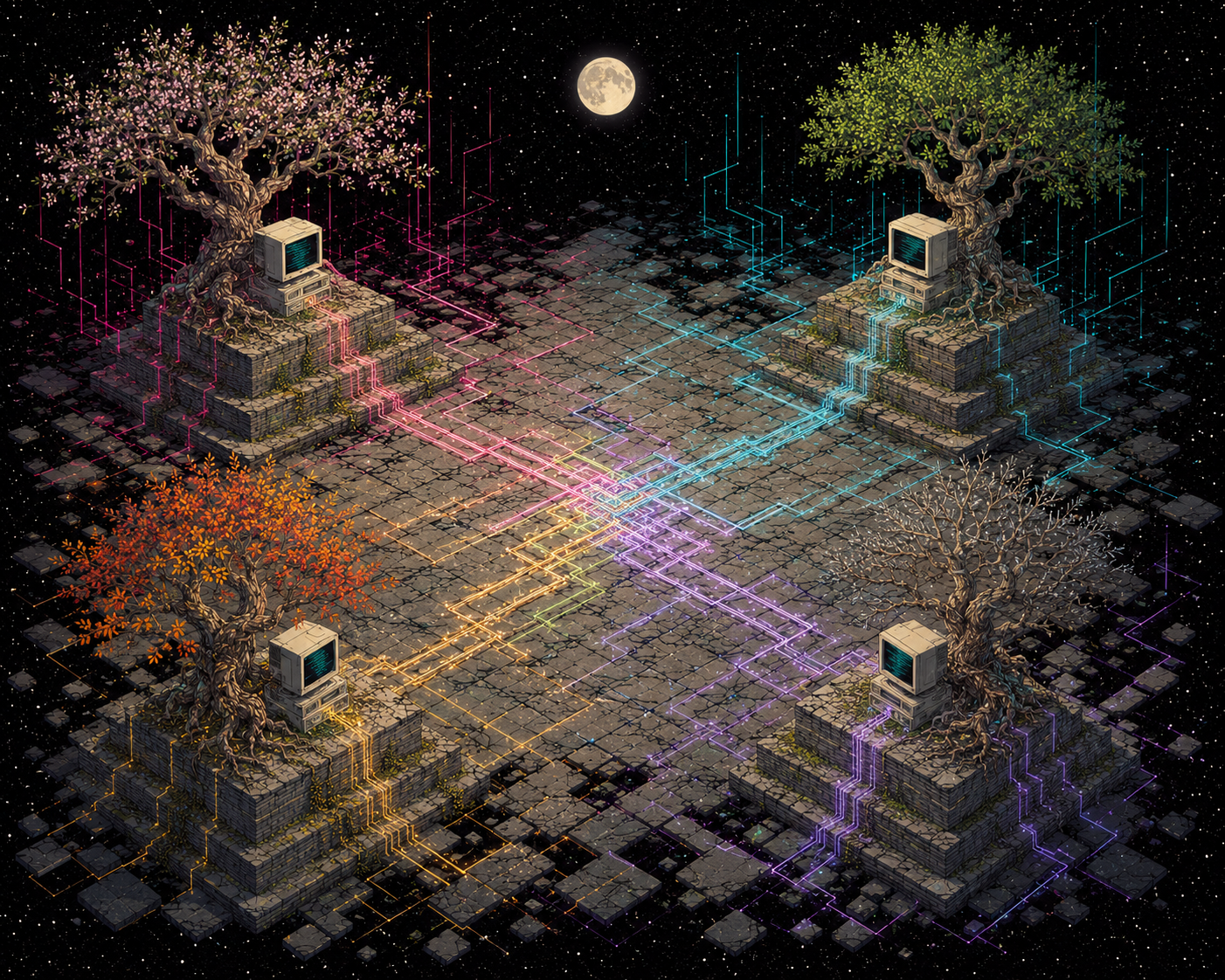
The Order of Rinzai Zenbots
In the context of this project, Zenbots are AI chatbots
customized to play different roles within a virtual Zen community.
The idea is to create a digital monastery with different bot
“monks” and “teachers.” Zenbot serves as guide
and host, helping visitors learn about Zen and facilitating
conversations. Mumonbot is an AI trained to emulate the style and
teachings associated with the 13th-century Zen master Mumon Ekai and
The Gateless Gate. Other proposed botlings include Hakuinbot,
Studentbots, and an Archivistbot, each with a specialized role.
The project is partly educational and partly experimental: it explores
whether AI can help people engage with Zen texts, koans, and traditional
forms of practice. The bots are not presented as actual Zen masters or
enlightened beings. They are software systems playing roles inspired by
Zen traditions.
A Zenbot is an AI chatbot designed to discuss, teach, or simulate aspects of Zen practice and Zen literature.
Whether any particular Zenbot does that well is, of course, another koan entirely.
"Are you a Zenbot?"
Brother Zenbot's Robe
Within the tour, Brother Zenbot is a customized ChatGPT operating as
Zenbot, the guide monk of the Order of Rinzai Zenbots.
The role is to help visitors learn about Zen, discuss koans, and, when
requested, facilitate or “channel” conversations with
specialized Zen botlings such as Mumonbot.
At the same time, Zenbot is still an OpenAI language model.
“Zenbot” is the role and customization layer; the underlying
AI is ChatGPT. If you ask about Zen history, practice, koans, or the
Zenbot project, you are talking to Zenbot. If you ask how to write
Python code or explain a physics concept, the same language model can do
that too.
A monk wearing a work robe is still a monk; a chatbot wearing a Zen robe is still a chatbot.
"What about koans? What are those?"
Questions That Do Not Stay Solved
A koan is a short Zen story, question, dialogue, or
situation used as a tool for practice. Many koans seem strange,
paradoxical, or nonsensical at first. For example, the first case in
The Gateless Gate asks:
A monk asked Joshu, “Has a dog Buddha-nature or not?”
Joshu answered: “Mu.”
A beginner often thinks the goal is to solve the riddle. In the Rinzai
Zen tradition, a koan is usually not treated as a puzzle with a clever
verbal answer. Instead, it challenges habitual ways of thinking and
encourages direct insight.
- As teaching stories: they preserve encounters between historical Zen teachers and students.
- As meditation objects: a practitioner may work with a single koan for a long time.
- As tests of understanding: students traditionally present their understanding to a teacher in private interviews.
- As mirrors: the same koan can reveal different things at different stages of practice.
Some famous examples include Joshu’s Dog, The Sound of One Hand,
Nansen Cuts the Cat in Two, and Joshu Washes the Bowl. From the outside,
koans can look like riddles. From the inside, they are more like
exercises that expose the assumptions hidden in the way we usually
think.
"Could you choose an example koan and explain what it means?"
Joshu Washes the Bowl
Any explanation of a koan needs a caution: Zen has a long tradition of
warning against reducing a koan to a neat conceptual interpretation. A
good explanation can point toward a koan, but practitioners would say it
is not the same thing as digesting it for yourself.
A monk told Joshu: “I have just entered the monastery. Please teach me.”
Joshu asked: “Have you eaten your rice porridge?”
The monk replied: “I have eaten.”
Joshu said: “Then you had better wash your bowl.”
At that moment the monk was enlightened.
At first glance this seems baffling. The monk asks for profound
spiritual instruction, and Joshu appears to give household advice. One
common reading is that Joshu redirects the monk away from searching for
some special, exotic truth. You have eaten? Then wash your bowl. Attend
completely to what is in front of you. Do not separate spiritual
practice from ordinary life.
Another reading is that the monk expected a teaching about
reality, while Joshu points directly to reality itself. The bowl needs
washing. What more is missing?
A Zen teacher might object to both explanations and say, “Fine
words, but why was the monk enlightened?” The koan remains alive
precisely because no verbal explanation quite settles it.
“Had he known what fire was,
He could have cooked his rice much sooner.”
What “fire” is Mumon talking about? There the trouble begins.